
 EN
EN



Every office faces the recurring challenge of selecting the right printer cartridge without overspending or sacrificing print quality. A printer cartridge may seem like a minor purchase, but over time, the cumulative cost of replacing a printer cartridge across a fleet of devices can represent a significant portion of operational expenses. Understanding how to evaluate each printer cartridge option through a cost-benefit lens is essential for any business that depends on high-volume printing.
This guide breaks down the core factors that determine the true value of a printer cartridge, moving beyond the sticker price to examine yield, reliability, device compatibility, and long-term cost per page. Whether you manage a small office or a large print environment, the right printer cartridge decision can reduce downtime, improve output consistency, and lower your total cost of ownership.
Understanding Printer Cartridge Types and Their Cost Implications
Original vs. Compatible Printer Cartridge Options
The first decision in any printer cartridge selection process is whether to choose an original equipment manufacturer cartridge or a compatible alternative. An original printer cartridge is designed specifically for a given device model, ensuring precise chemical composition, fill volume, and nozzle compatibility. A compatible printer cartridge, on the other hand, is manufactured by a third party to match the same specifications at a lower upfront price. The cost difference between an original printer cartridge and a compatible one can range from 20% to over 50%, making the choice financially significant.
However, a lower-priced compatible printer cartridge does not always translate into long-term savings. Some compatible versions deliver inconsistent toner density, which forces reprints and increases overall consumption. When evaluating any printer cartridge, buyers should request documented yield data and compare cost per page rather than cost per unit. A high-yield original printer cartridge often delivers better value per printed page than a cheaper compatible option with lower yield.
Toner Yield and the True Cost of Each Printer Cartridge
Page yield is one of the most important metrics when selecting a printer cartridge. A standard-yield printer cartridge may appear affordable, but a high-yield printer cartridge designed for the same device can produce significantly more pages before replacement is needed. For a business printing thousands of pages per month, switching from a standard to a high-yield printer cartridge can cut annual supply costs considerably. Always check the ISO-rated page yield of any printer cartridge and calculate the cost per page to make a fair comparison.
Key Cost-Benefit Factors in Printer Cartridge Selection
Device Compatibility and Long-Term Reliability
A printer cartridge that is not fully compatible with your device can cause more than poor print quality. Incompatibility may trigger error codes, jam the paper path, or in extreme cases, damage the drum unit. These repair costs far outweigh any initial savings from choosing a cheaper printer cartridge. Before purchasing any printer cartridge, confirm that the cartridge is certified or tested for your specific printer model. For multifunction copiers such as the Ricoh IMC3500 or MPC3503, using a printer cartridge matched to the device ensures stable performance and protects the machine's warranty.
Reliability also extends to storage and shelf life. A printer cartridge stored improperly or held beyond its usable period may deliver degraded output even before the toner is depleted. When sourcing a printer cartridge in bulk, verify the production date and storage conditions to avoid waste. A reliable printer cartridge supply chain reduces emergency replacements and keeps productivity uninterrupted.
Color vs. Monochrome Printer Cartridge Economics
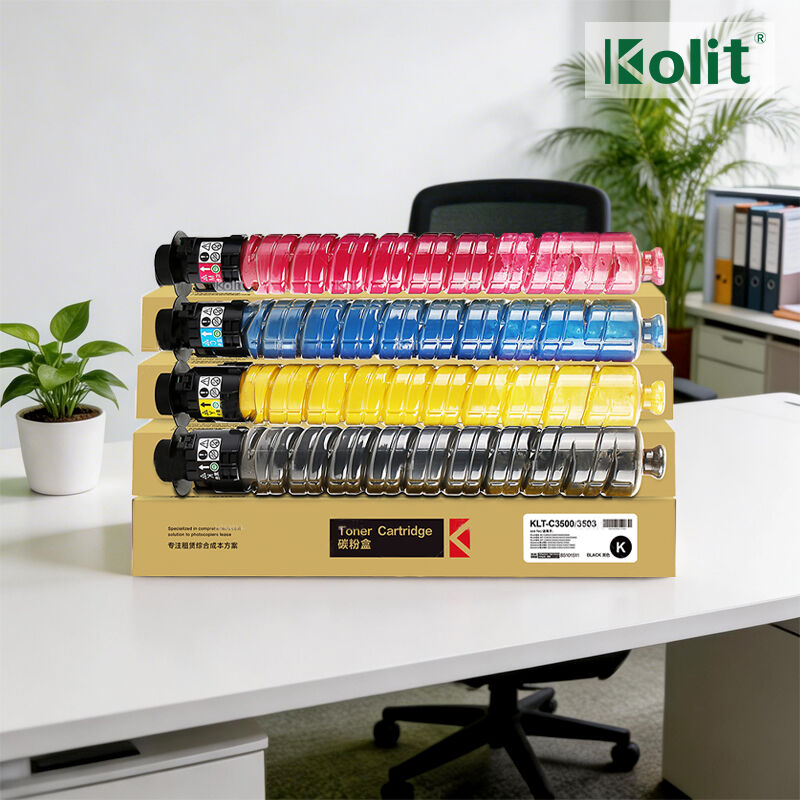
Color printing introduces additional complexity into the printer cartridge cost equation. A color printer cartridge set typically includes separate units for cyan, magenta, yellow, and black toner. If your device depletes one color printer cartridge faster than others due to document type, you may need to replace individual cartridges at different intervals. Some high-volume copiers allow individual color printer cartridge replacement, which helps avoid discarding partially used units. Analyzing your color usage patterns before committing to a printer cartridge procurement plan can prevent unnecessary expenditure on colors that see minimal use.
For environments that print primarily in black and white, a monochrome printer cartridge strategy is usually more economical. However, even in mixed environments, having a clear policy for when to use color output and when to default to monochrome can significantly reduce printer cartridge consumption per department. A printer cartridge usage audit is a practical starting point for identifying cost-reduction opportunities.
Building a Smart Printer Cartridge Procurement Strategy
Volume Purchasing and Standardization
One of the most effective ways to reduce printer cartridge costs is through volume purchasing and device standardization. When an organization standardizes on a single printer model or family, the same printer cartridge can be used across multiple devices, reducing the number of SKUs to manage and enabling bulk pricing. A consolidated printer cartridge inventory also simplifies reordering and reduces the risk of stockouts. Vendors often offer tiered pricing on printer cartridge orders, so purchasing in larger quantities can lower the per-unit cost while maintaining consistent supply.
Evaluating Total Cost of Ownership for Each Printer Cartridge
Total cost of ownership goes beyond the purchase price of each printer cartridge. It includes maintenance costs triggered by cartridge-related issues, technician time spent on device errors, waste disposal for spent cartridges, and the productivity loss caused by poor print quality. A premium original printer cartridge that costs more upfront may actually reduce total spending when these hidden factors are included. Businesses should track printer cartridge performance data over time, including average yield achieved versus rated yield, to benchmark supplier reliability and justify procurement decisions with data.
Sustainability is also entering the cost-benefit conversation. Choosing a printer cartridge with a manufacturer take-back or recycling program adds environmental value without necessarily increasing cost. Some original printer cartridge programs offer return incentives that partially offset the purchase price. Incorporating these programs into your printer cartridge strategy strengthens both fiscal and environmental responsibility.
FAQ
How do I calculate the true cost of a printer cartridge?
Divide the price of the printer cartridge by its ISO-rated page yield to get the cost per page. This metric allows a direct comparison between different printer cartridge options regardless of unit price. Remember to factor in any recurring issues like reprints or device errors caused by incompatible cartridges, as these raise the effective cost per page beyond the initial calculation.
Is a high-yield printer cartridge always the better choice?
A high-yield printer cartridge delivers a lower cost per page in most high-volume environments, making it the more economical choice for busy offices. However, if print volume is low, a high-yield printer cartridge may dry out or degrade before it is fully used. Match the printer cartridge yield tier to your actual monthly print volume for the best balance of cost and performance.
Can using a compatible printer cartridge void my device warranty?
In many regions, using a compatible printer cartridge does not automatically void a device warranty, but the manufacturer may decline warranty claims for damage directly caused by the non-original printer cartridge. To protect your investment, choose a compatible printer cartridge from a supplier that offers documented quality testing and a clear liability policy. For high-value multifunction devices, using an original printer cartridge is generally the safest approach to preserving warranty coverage.