
 EN
EN



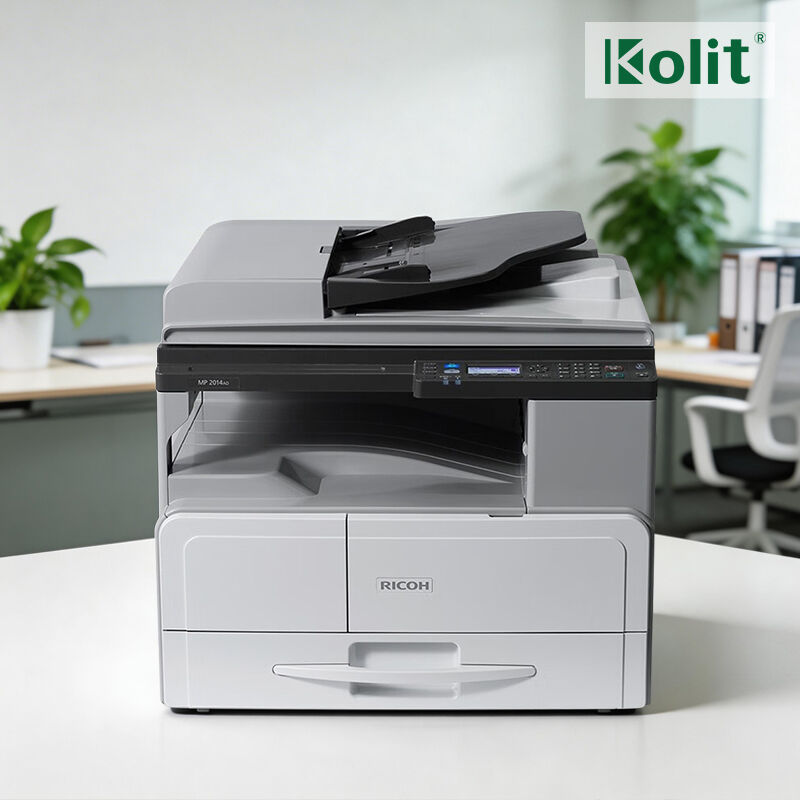
Understanding Total Cost of Ownership for Leased Copiers
Many businesses focus on the monthly lease payment when choosing a copier, but the total cost of ownership (TCO) extends far beyond that figure. Hidden cost drivers buried in the contract and usage patterns can add 20–30% to the true cost over the lease term. Understanding these components is essential for accurate budgeting and long-term savings.
Hidden cost drivers: Minimum volume commitments, page aggregation, and fleet-level billing traps
Lease agreements often include minimum volume commitments that penalize underuse—forcing companies to pay for pages they never print. Page aggregation across the fleet—combining meter readings from multiple devices—can mask inefficiencies, as one machine’s overage subsidizes another’s underuse. Fleet-level billing traps occur when charges are allocated unfairly, such as applying overage rates to pooled totals rather than individual devices. Without careful contract review, these hidden drivers silently inflate the TCO of a leased copier.
The $0.03–$0.07/page overage trap: True-up clauses, toner penalties, and unallocated usage
Overage charges typically range from $0.03 to $0.07 per page beyond the base volume. True-up clauses at the end of the term retroactively apply penalties for exceedances over the entire lease period, creating surprise bills. Toner penalties arise when using non-approved supplies—often doubling the per-page cost. Unallocated usage—pages printed by departments not charged directly—further compounds waste. These traps can turn a seemingly affordable copier lease into a costly expense if not negotiated up front.
Compound cost escalation: Annual service increases and lease escalators over 36 months
Lease contracts commonly include annual escalators of 2–4% for service and rental fees. With a 3% escalator over 36 months, the base monthly payment rises by roughly 9% cumulatively. Service contracts often renew with automatic price hikes, while toner and maintenance costs increase independently. These compounding increases can add hundreds of dollars per device per year, making the TCO of a leased copier much higher than the initial proposal suggested. Addressing escalation clauses during negotiation is critical to controlling long-term costs.
How MPS Integration Reduces Copier Leasing Costs
Maintenance-inclusive MPS contracts cutting TCO by 22–30% (Keypoint Intelligence 2023 benchmark)
Integrating Managed Print Services (MPS) significantly lowers total cost of ownership for leased copiers. Maintenance-inclusive MPS contracts consolidate service agreements into a single predictable expense—eliminating separate maintenance contracts and preventing unexpected repair bills. Keypoint Intelligence’s 2023 benchmark confirms businesses achieve 22–30% TCO reductions through this approach. The all-inclusive model covers toner replenishment, preventative maintenance, priority technical support, and replacement parts coverage. Consolidating these services avoids vendor markup on consumables and labor while reducing administrative overhead associated with managing multiple service contracts.
Print usage analytics and automated monitoring: Eliminating 35%+ waste in mid-market copier fleets
Advanced print analytics transform cost management for leased copier fleets. Automated monitoring systems track actual usage patterns across all devices, revealing significant waste sources in mid-market environments—including underutilized devices (found in 30% of fleets), color overuse for internal documents, default high-resolution settings, and unnecessary personal printers. Corrective actions based on these insights eliminate 35%+ of wasteful printing. Optimization strategies include right-sizing fleets and implementing enforceable print policies—delivering sustained cost reduction throughout the lease term.
Strategic Copier Lease Negotiation for Long-Term Savings
Negotiating a copier lease effectively reduces recurring costs without sacrificing service quality. Begin by committing to longer contract terms—three to five years—to lock in lower monthly rates. Vendors often offer significant discounts in exchange for multi-year stability, so ask for a rate reduction equivalent to 15–25% off the standard short-term price. Use your total fleet volume as leverage: consolidating all devices under one agreement lets you demand per-page pricing below market average. Insist on including service, toner, and maintenance in the lease to avoid surprise bills for common wear items. Also, negotiate a cap on annual price escalators—aim for no more than 2% per year—and request a clause that allows mid-term technology upgrades. Finally, schedule a formal review every 12 months to adjust terms as your print volume changes. These steps ensure the contract aligns with your actual usage and turns a standard copier lease into a predictable, cost-efficient asset for the long haul.
Measuring ROI: Key Metrics to Track Post-Optimization
Cost-per-page reduction, uptime improvement, and service response time benchmarks
Tracking cost-per-page (CPP) reduction provides the clearest financial proof of optimization success. Compare the blended CPP across the entire fleet before and after deploying an MPS solution. A typical mid-market fleet sees CPP drop by 20–30% within six months. Uptime improvement is equally critical—measure the percentage of devices available during business hours. Aim for 99% uptime or higher, as this directly reduces user frustration and lost productivity. Service response time benchmarks, such as average hours to resolve a jam or error, should also be monitored. Leading providers commit to four-hour response windows, and a consistent track record below that threshold signals a healthy service layer.
Fleet utilization rate and sustainability impact: Pages per device per month (PPM) optimization
Fleet utilization rate, expressed as pages per device per month (PPM), reveals how efficiently each copier is used. Optimize for 5,000–8,000 PPM for a standard workgroup copier; lower rates indicate underutilization and wasted lease costs, while much higher rates may signal the device is overloaded and nearing maintenance triggers. By consolidating low-usage devices into higher-capacity machines, you reduce total lease fees and electricity consumption. This also lowers cartridge disposal volumes and paper waste, contributing directly to sustainability goals. Track the percentage of devices that meet your target PPM range quarterly. A move from 55% to 75% utilization is typical after a fleet refresh—cutting both per-page costs and environmental impact.
Ready to Optimize Your Copier Leasing Costs with MPS?
Copier leasing costs are driven far more by hidden fees and inefficient fleets than by base rent. Without smart structure and ongoing monitoring, expenses can balloon by 20–30% over time. By integrating Managed Print Services (MPS) into your leasing strategy, you lock in predictable pricing, eliminate surprises, and slash total ownership costs.
For cost-effective copier leasing and MPS solutions tailored to global businesses, including brand-new and remanufactured copiers from Canon, Ricoh, Xerox, and Konica Minolta, plus flexible leasing terms and certified support, partner with Kolit. With 30+ years of printing industry expertise, 15 global branches, and 390 certified engineers, we deliver end-to-end managed print services and copier leasing that lower your TCO and scale with your business. Contact us today for a no-obligation consultation to optimize your copier leasing strategy.
FAQ
What is the Total Cost of Ownership (TCO) for a leased copier?
TCO encompasses all expenses related to a leased copier, including the monthly lease payment, overage charges, service fees, escalators, and hidden costs like minimum volume commitments and fleet-level billing traps.
How do Managed Print Services (MPS) help reduce copier costs?
MPS integrates maintenance, toner, and support into a single predictable expense, eliminates waste through analytics, and achieves TCO reductions of 22–30% based on industry benchmarks.
What are hidden cost drivers in copier leases?
Hidden drivers include penalties for underuse, page aggregation issues across multiple devices, and fleet-level billing traps that unfairly increase charges.
How can businesses negotiate better copier leases?
By committing to longer-term contracts, consolidating all devices under one agreement, capping annual price escalators, and including service/maintenance in the lease, businesses can reduce costs significantly.
What metrics are important to track post-optimization of a copier fleet?
Key metrics include cost-per-page reduction, device uptime, service response time, fleet utilization rate, and sustainability impact such as reduced paper and toner waste.