
 EN
EN



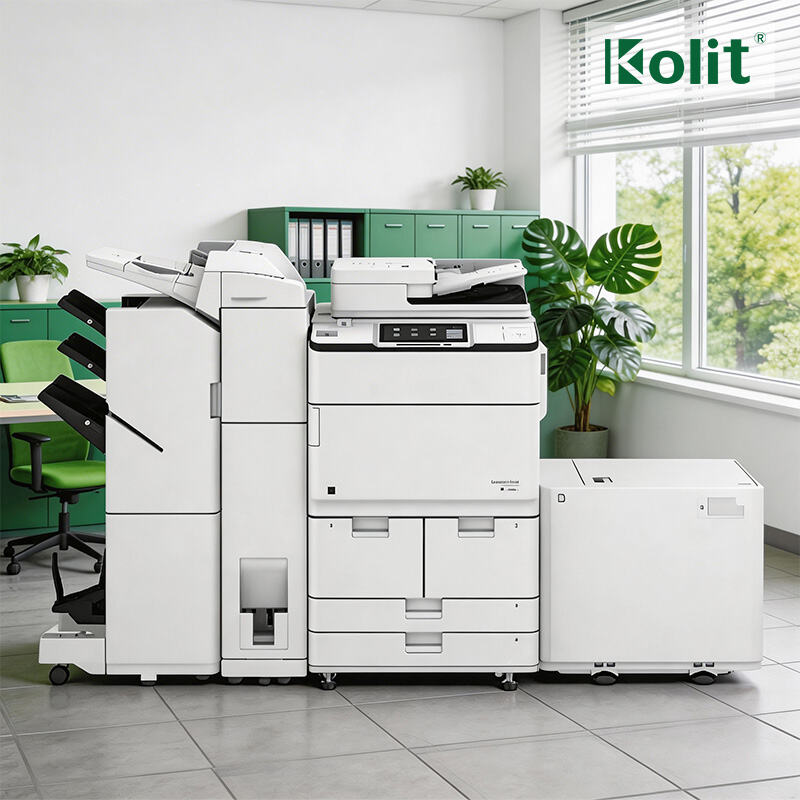
Why Office Copiers Wholesale Is the Strategic Foundation for Scalable Growth
Matching Copier Capacity to Real Business Trajectories—Not Just Headcount
When businesses want to scale their operations, they need to think about buying office copiers wholesale based on what documents they actually expect to produce rather than just counting how many employees there are right now. Companies that are moving into new markets or going through the process of digitizing old paper records tend to end up needing anywhere from 30 to 50 percent more copies than what simple math would suggest based on staff numbers alone. According to research published last year in the field of office equipment management, companies that stick strictly to calculating needs based on employee counts wind up dealing with roughly 27% more machine downtime when things start growing fast. Smart bulk purchasing means looking ahead at those critical moments like busy seasons when everyone needs extra prints or when opening another location somewhere else. This approach keeps everything running smoothly instead of scrambling later on to buy expensive machines at the last minute because nobody planned properly.
The Hidden Cost of Fragmented Procurement: How Ad-Hoc Buying Undermines Efficiency
Decentralized copier acquisitions create compounding operational drains:
- Toner incompatibility: Mixed fleets require 3–5 more SKU storage
- Maintenance fragmentation: Technicians spend 40% more time diagnosing varied models
- Contract overhead: Managing 20 separate service agreements wastes ~150 hours/year
This inconsistency inflates total costs by 18–35% compared to standardized wholesale deployments. Centralized procurement doesn't just reduce expense—it transforms copiers from isolated machines into integrated productivity hubs aligned with enterprise-wide IT and workflow standards.
Office Copiers Wholesale: Optimizing Total Cost of Ownership (TCO)
Toner, Energy, and Service Bundles: Where Bulk Contracts Deliver 22–35% TCO Reduction
Procuring office copiers wholesale transforms TCO by consolidating fragmented expenses into predictable, long-term investments. While hardware accounts for only 40% of lifetime costs, bulk contracts target the remaining 60% through three high-impact levers:
- Toner and consumables optimization: Volume discounts cut per-page costs by 18–27%
- Energy efficiency standardization: Uniform fleet management lowers power consumption 15–30%
- Unified service agreements: Proactive maintenance bundles prevent over 40% of avoidable downtime costs
The Ponemon Institute's 2023 Enterprise Equipment Management Study confirms enterprises leveraging wholesale procurement achieve 22–35% lower TCO over five years—primarily by eliminating redundant vendor relationships, synchronizing refresh cycles, and embedding sustainability and security protocols at scale.
Beyond Hardware: Workflow Intelligence and Automation in Bulk Copier Deployments
Document Automation, Cloud Integration, and Usage Analytics Across Fleet Environments
Wholesale programs for modern office copiers are changing how these machines function in workplaces today. They're becoming much more than simple printing devices now. With document automation built right in, businesses can automate all sorts of routine work such as scanning documents, sending them where they need to go, and keeping archives safe and organized. This cuts down on hours spent doing things manually, roughly two-thirds less depending on what kind of business we're talking about. For companies with offices spread out over different locations, cloud based fleet management systems offer something really valuable too. These systems let managers keep tabs on everything from one central place while making sure software stays updated across all devices, enforcing company policies consistently, and applying necessary security fixes without anyone even noticing it happening most of the time.
Usage analytics deliver actionable insights:
- Volume trends identify underutilized units for consolidation
- Anomaly detection flags maintenance needs before failure
- Department-level utilization data informs strategic resource allocation
Predictive algorithms—trained on anonymized fleet telemetry—cut unplanned downtime by 40% through proactive toner replenishment and component replacement (Operational Efficiency Report, 2023). This intelligence layer turns bulk deployments into adaptive, self-optimizing assets—delivering sustained 22–35% operational savings while scaling responsively with business evolution.
Implementation Best Practices for Seamless Office Copiers Wholesale Rollouts
Successful large-scale deployments require disciplined execution to minimize disruption and maximize adoption. Begin with a cross-departmental needs assessment—mapping current volume peaks, workflow bottlenecks, and validated growth projections. Engage stakeholders early: IT, facilities, finance, and department leads must co-define technical requirements and success metrics before vendor selection.
Adopt a phased rollout:
- Pilot deployment in one department validates configuration, user training, and integration readiness
- Gradual scaling allows real-time refinement of maintenance SLAs and support protocols
- Full implementation follows tested troubleshooting playbooks and documented escalation paths
Vendor provided scenario based training should be at the top of the list, not only for IT folks but also those working on the front lines day in and day out. Organizations that invest in properly trained teams see around 30 percent drop in support requests plus quicker fixes when things go wrong during workflows. And don't forget to set up regular feedback channels between actual users and IT departments. These ongoing conversations help fine tune predictions about supplies needed, plan maintenance better, and track how new features get adopted across different departments. Taking this kind of organized approach reduces risks during implementation, speeds up return on investment, and creates valuable knowledge within the company that will serve them well when they face other tech changes down the road.
Ready to Scale Your Business with Bulk Commercial Copier Supply?
Bulk commercial copier supply is the backbone of scalable, cost-efficient enterprise operations—standardized fleets eliminate procurement waste, cut TCO, and deliver intelligent workflow automation that grows with your business. Fragmented, ad-hoc copier buying only creates downtime, higher costs, and operational friction as you expand.
For end-to-end bulk commercial copier supply and wholesale office copier solutions featuring Canon, Ricoh, Xerox, and Konica Minolta devices—including brand-new, high-speed production models and eco-friendly remanufactured units, unified maintenance bundles, cloud-integrated fleet management, and customized bulk pricing—partner with a globally trusted B2B print solutions expert. Backed by 30+ years of experience in printing, Kolit operates 3 advanced manufacturing facilities, 15 nationwide branches, and a team of 390 certified engineers, delivering ISO/CE/ROHS-compliant wholesale copier deployments and one-stop MPS solutions for scaling enterprises worldwide. Contact us today for a no-obligation fleet assessment and bulk procurement consultation to build a scalable, cost-optimized copier strategy for your business.
FAQ
Why should businesses purchase office copiers wholesale rather than individually?
Purchasing office copiers wholesale allows businesses to optimize costs, streamline operations, and avoid last-minute expenses during peak times or expansion. It aligns copier capacity with actual business needs, not just current headcount.
How does centralized procurement of copiers improve efficiency?
Centralized procurement reduces total costs and transforms copiers into integrated productivity hubs by standardizing toner, maintenance, and service agreements across the enterprise, which minimizes incompatibility and overhead.
What components contribute to Total Cost of Ownership (TCO) reductions?
Bulk contracts focus on reducing costs through toner and consumables optimization, energy efficiency standardization, and unified service agreements, delivering significant TCO savings over time.
How can document automation and cloud integration benefit businesses?
Document automation streamlines routine tasks like scanning and archiving, while cloud integration facilitates centralized management, policy enforcement, and security updates across different locations efficiently.
What are best practices for deploying office copiers at scale?
Conduct a needs assessment, engage stakeholders early, adopt phased rollouts, and provide vendor-based training while establishing feedback channels for seamless deployment and effective use.
Table of Contents
- Why Office Copiers Wholesale Is the Strategic Foundation for Scalable Growth
- Office Copiers Wholesale: Optimizing Total Cost of Ownership (TCO)
- Beyond Hardware: Workflow Intelligence and Automation in Bulk Copier Deployments
- Implementation Best Practices for Seamless Office Copiers Wholesale Rollouts
- Ready to Scale Your Business with Bulk Commercial Copier Supply?
-
FAQ
- Why should businesses purchase office copiers wholesale rather than individually?
- How does centralized procurement of copiers improve efficiency?
- What components contribute to Total Cost of Ownership (TCO) reductions?
- How can document automation and cloud integration benefit businesses?
- What are best practices for deploying office copiers at scale?