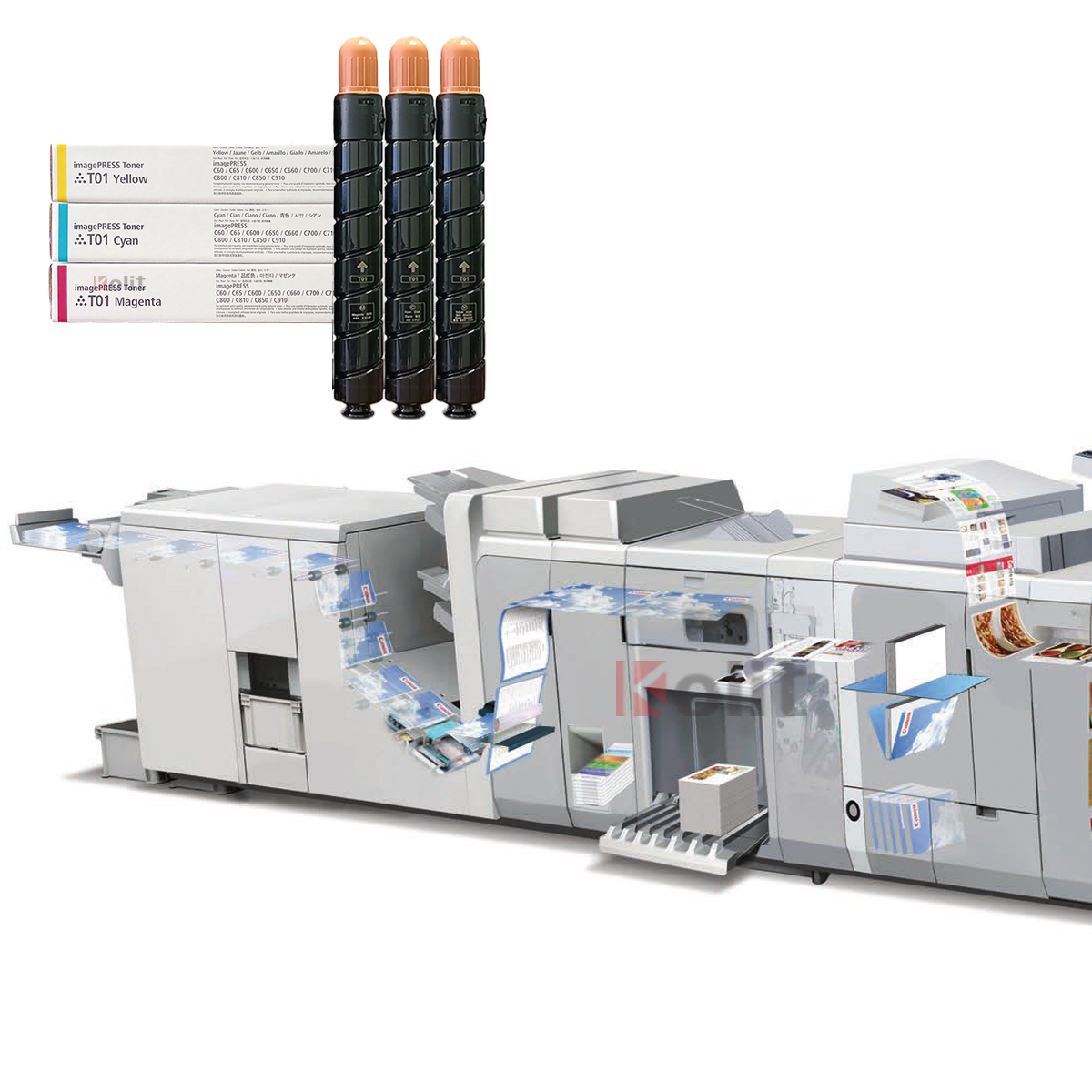
 ×
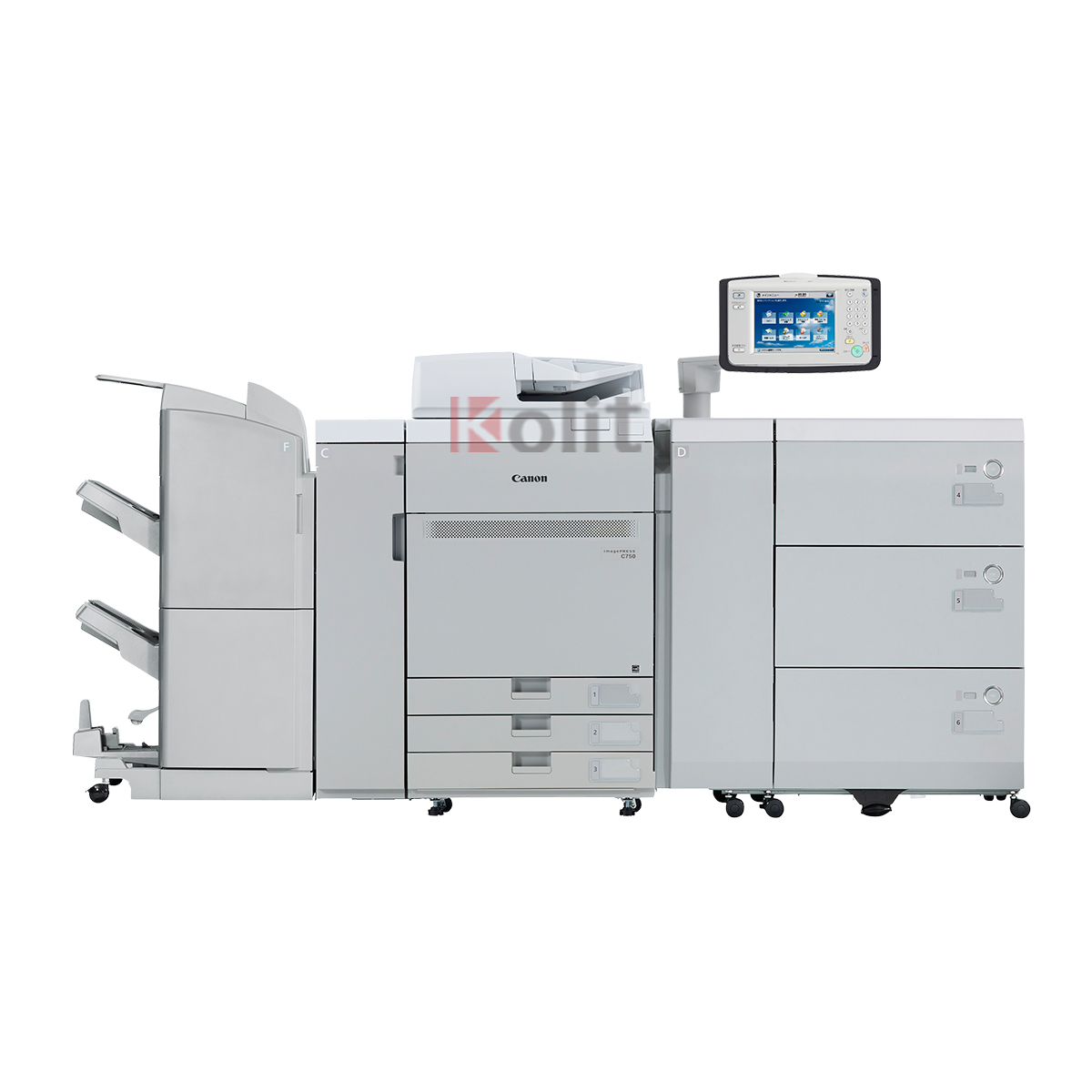
Canon imagePRESS
C850 85ppm
C750 75ppm
C650 65ppm
A3 Color Production MFPs 2,400 x 2,400 dpi Resolution Supports 52-300gsm Media 4.5GB RAM + 1TB HDD Multiple Finishing Options

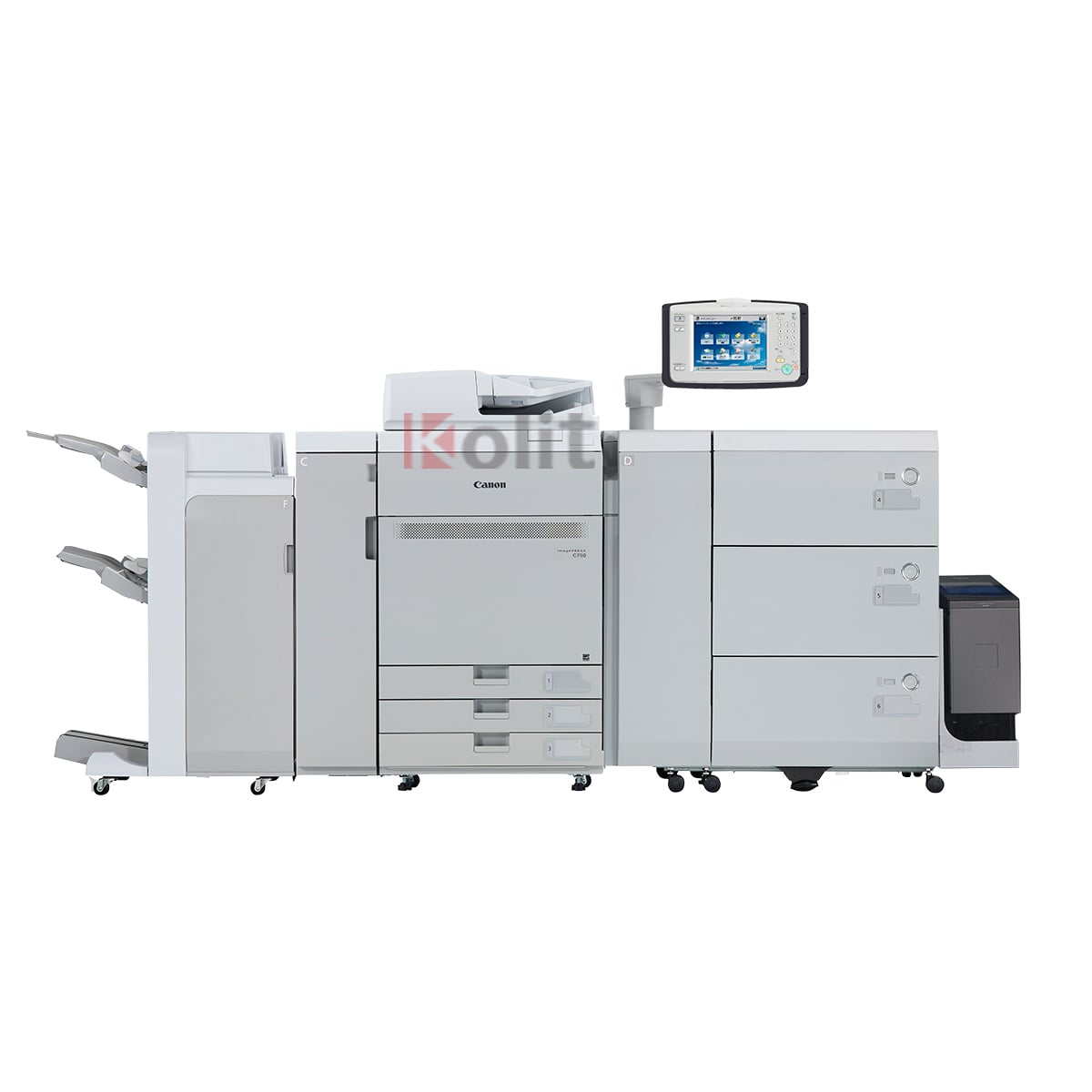
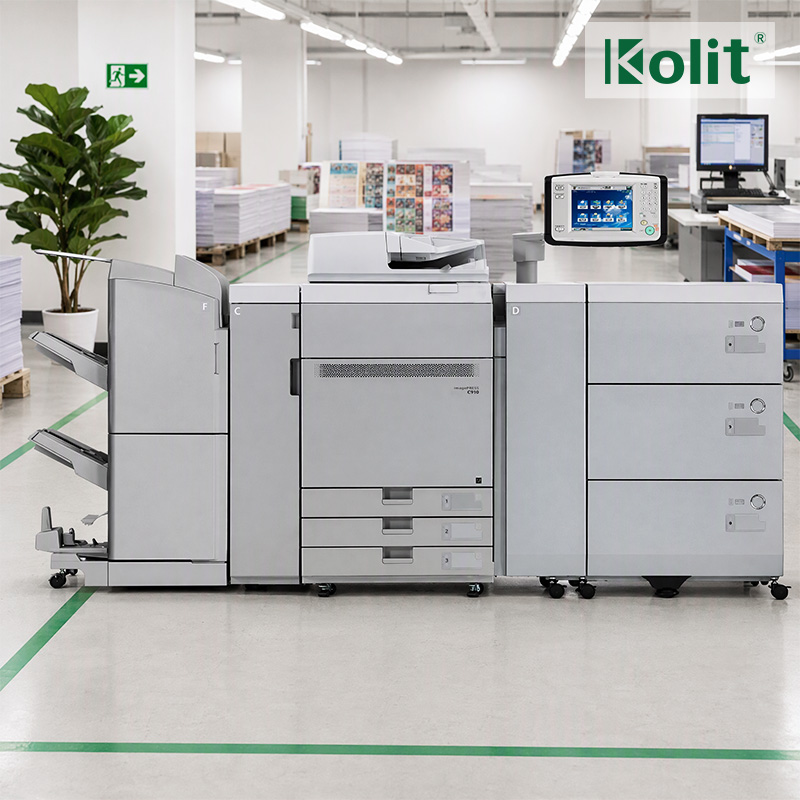
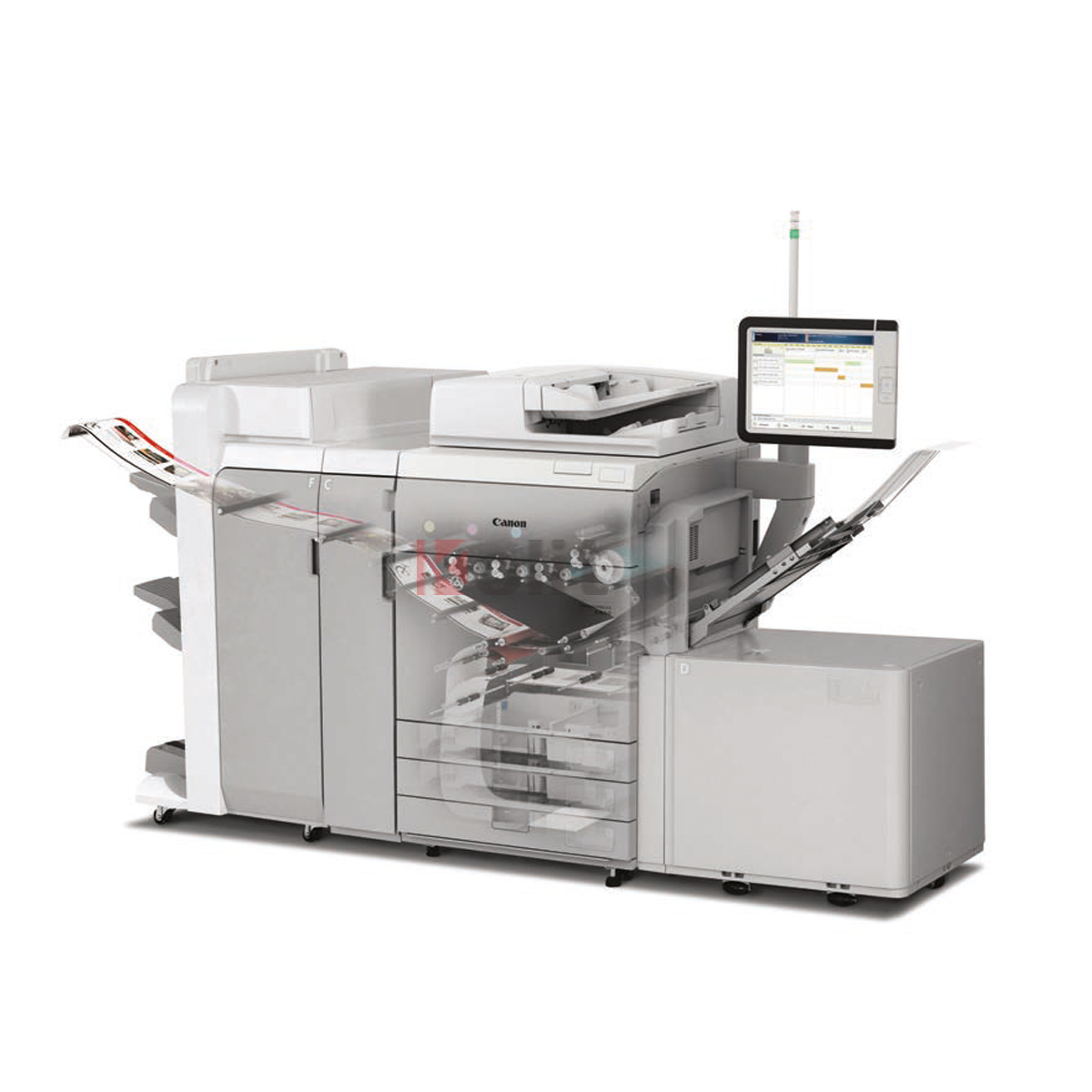
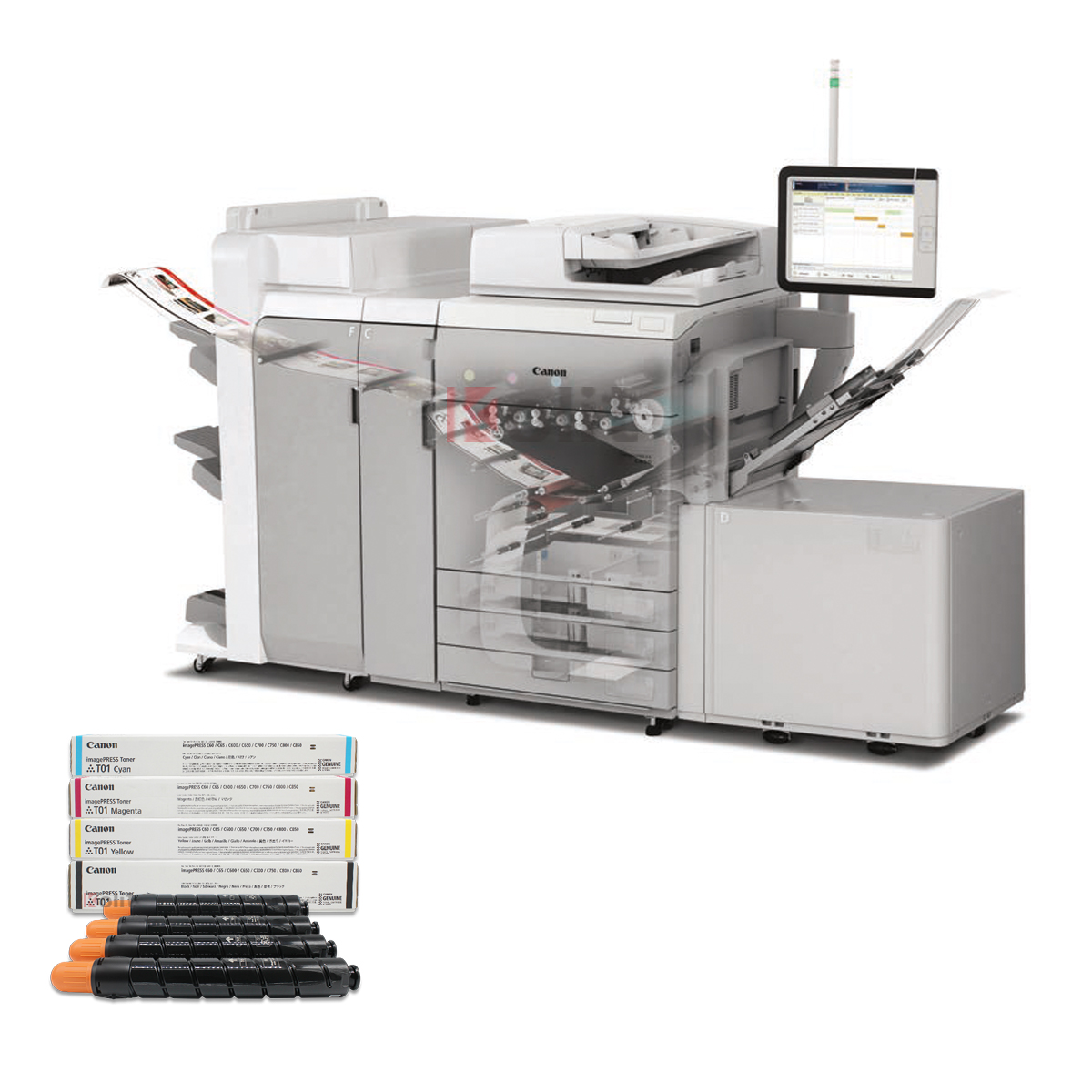
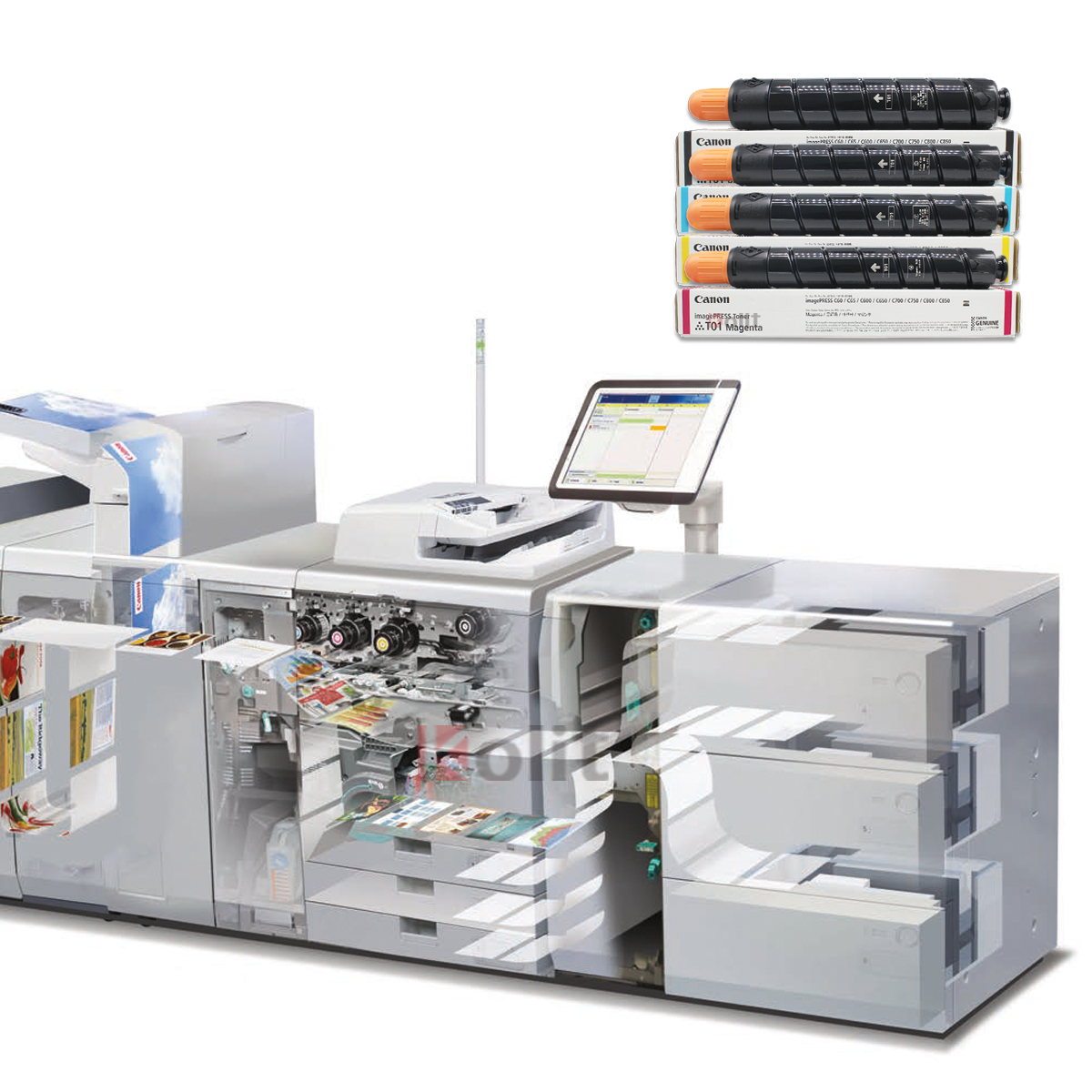
The imagePRESS C850 Series sits at the point where a growing print operation stops being able to afford office-class equipment, but is not yet ready for the capital weight of a full mid-range production press. Three models — C850, C750, C650 — deliver rated A4 speeds of 85 ppm, 75 ppm, and 65 ppm respectively, in both color and black-and-white. They share the same 2400 × 2400 dpi R-VCSEL imaging platform and a 190 lpi screen, so the choice between models turns on throughput and duty rhythm, not on the ceiling of print quality.
This is the segment where Ricoh fields its IM C6500 and IM C8000 — 65 ppm and 80 ppm respectively — and where the Pro C5300S/C5400S series pushes to 80 ppm with a 2400 × 4800 dpi VCSEL engine. The imagePRESS C850 Series is Canon's answer in that same light-production bracket: a sheet-fed color press that keeps the media range, long-sheet capability, and controller choice of a production machine, without asking the buyer to step up to the C910 Series footprint or price point.
imagePRESS C850 — 85 ppm. The top of the line for operations whose deadline profile leaves little room for queue buildup: short-run commercial work, marketing collateral, and mixed-media streams that need the press to keep pace with the front office.
imagePRESS C750 — 75 ppm. The middle configuration, for in-plants and commercial shops that need production-class output but do not run every hour of the shift at the top of the speed curve.
imagePRESS C650 — 65 ppm. The entry into the series, with the same 2400 × 2400 dpi engine, the same long-sheet handling, and the same controller options as its faster siblings. For a print service provider stepping up from a light-production device — or weighing a 65 ppm Ricoh IM C6500 — the C650 keeps the application range intact while matching the lower end of the segment's speed band.
The series uses Canon's 32-beam R-VCSEL red laser to write at true 2400 × 2400 dpi. The practical value shows up where buyers actually inspect output: small type, fine linework, and the smoothness of gradients across large solids. The 190 lpi screen reduces graininess and moiré on both uncoated business papers and coated brochure stocks, keeping the finish clean across the media mix a light-production shop actually runs.
Where the Ricoh comparison becomes relevant: the IM C6500/C8000 and Pro C5300S class advertise 2400 × 4800 dpi through VCSEL, a headline number achieved through sub-scan interpolation. The imagePRESS C850 Series holds a true 2400 × 2400 dpi addressable grid on both axes. For brand-sensitive collateral and fine-detail commercial work, the difference is not a spec-sheet argument — it is visible on the sheet.
The series maintains rated speed on uncoated stocks up to 220 gsm, and supports auto duplex printing on long sheets up to 762 mm. That duplex long-sheet capability is the operational differentiator in this bracket: it covers book dust jackets, multi-fold leaflets, and banner work that would otherwise be pushed to a wide-format device or an offline finishing step.
On heavy stock, the series handles media beyond the standard light-production range, with duplex capability extending into the thicker end of the substrate mix. The feeding architecture is built for the mixed-media job streams that define light production — coated, textured, and specialty stocks running in the same shift — rather than for the uniform-paper environment of an office fleet.
Where Ricoh's IM C6500/C8000 tops out at 256 gsm duplex, the imagePRESS C850 Series is built for the heavier end of the light-production media mix. For shops whose job mix includes premium direct mail, packaging prototypes, or heavy promotional pieces, that media ceiling is the difference between a job staying on the production press and being outsourced.
Canon does not force a single digital front end on the C850 Series. Two controller paths cover the operational profiles in this segment:
PRISMAsync Print Server — Canon's integrated production controller, built around intuitive job management and a scheduling interface designed for operators moving from office equipment into production print. The PRISMAsync specification for the C850 Series includes Adobe PostScript 3, PDF/X and PDF/VT support, and a spot-color library covering HKS and Pantone references — a workflow foundation that does not require a separate RIP investment.
EFI Fiery imagePRESS Server H300 — Based on the Fiery NX Pro platform and FS200 Pro system software, the H300 brings Fiery Command WorkStation, Fiery ColorWise, Spot-On, Fiery Impose/Compose/JobMaster, and FreeForm variable-data capability to the series. For commercial printers already running Fiery across the shop floor, this preserves color tooling and operator familiarity rather than introducing a second DFE paradigm.
The Ricoh comparison here is structural rather than feature-by-feature: Ricoh's light-production models typically ship with a Ricoh-branded controller, with Fiery available as an option on some configurations. The imagePRESS C850 Series puts the choice of DFE at the center of the buying decision, which matters for shops whose workflow is already anchored to one ecosystem.
The series supports an in-line finishing chain that reaches beyond stapling: creasing with Canon die sets, saddle-stitch booklet production, and stacking options configured for the folded and bound applications that define commercial collateral. Combined with the media range, the configuration covers:
Commercial collateral: trifold and multi-fold brochures, saddle-stitched booklets, flyers, and presentation materials.
Direct mail and premium promotional work: heavier coated stocks, envelopes, and personalized variable-data pieces.
Long-sheet applications: dust jackets, multi-fold leaflets, and banner work up to 762 mm auto duplex.
Light book production: folded and stapled booklets, with finishing configured to the bind style rather than bolted on afterward.
Product Description
Copy Speed |
C650: 65 ppm (Black & White / Color same speed)
C750: 75 ppm (Black & White / Color same speed)
C850: 85 ppm (Black & White / Color same speed)
|
First Copy Time |
6.7 sec (B&W), 7.5 sec (Color) |
Print Speed |
C650: 65 ppm (Black & White / Color same speed)
C750: 75 ppm (Black & White / Color same speed)
C850: 85 ppm (Black & White / Color same speed)
|
Scan Speed |
B&W: Up to 200 opm (Letter, 300 dpi)
Color: Up to 140 opm (Letter, 300 dpi)
|
Print Resolution |
2,400 × 2,400 dpi (256 gradations) |
Power Supply |
220–240V, 50/60Hz, 16A × 2 |
Paper Sizes |
• Standard Trays: SRA3, A3, A4, A5, A6, B4, B5, B6, 13" × 19.2", 12" × 18", 11" × 17",
Legal, Letter, Executive, Custom sizes (139.7 × 148 mm to 330.2 × 487.7 mm), Envelopes
• Bypass Tray: SRA3, A3, A4, A5, A6, B4, B5, B6, 13" × 19.2", 12" × 18", 11" × 17",
Legal, Letter, Executive, Custom sizes (100 × 148 mm to 330.2 × 762 mm), Envelopes
|
Paper Weight |
• Standard Trays: 52–220 g/m²
• Bypass Tray: 52–300 g/m²
|
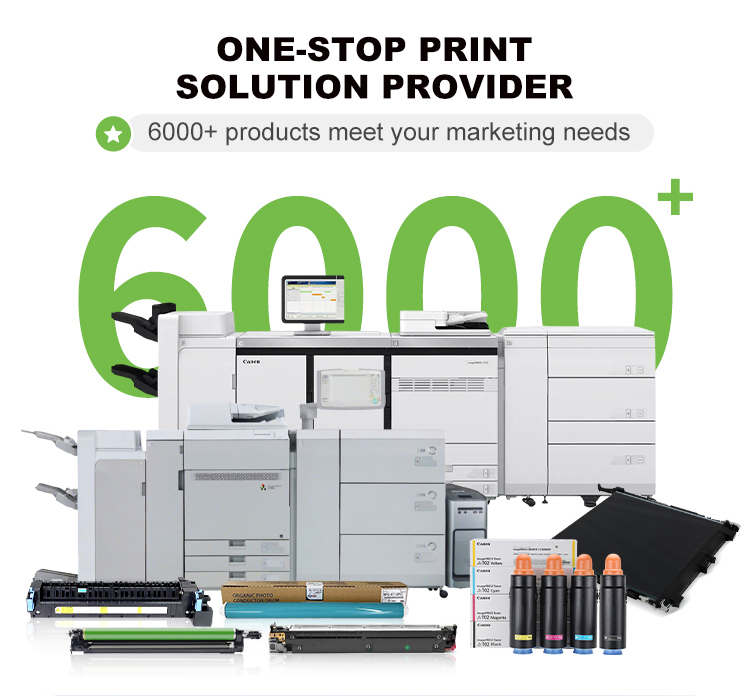
The imagePRESS C650/C750/C850 is aimed at the print service provider or in-plant manager who has already looked at the 65–80 ppm light-production bracket — including Ricoh's IM C6500/C8000 and Pro C5300S/C5400S — and is weighing where the application ceiling sits, not just the rated speed. The series keeps the 2400 × 2400 dpi R-VCSEL engine, the 762 mm duplex long-sheet capability, the heavier end of the media range, and the PRISMAsync/Fiery controller choice inside a compact production footprint. For the operation that needs production-grade color and media flexibility without the capital step up to a C910 Series machine, this is the configuration where investment meets the job mix the shop actually runs.
Request a sample print evaluation or a workflow consultation with your local Canon production print specialist.


 EN